Age-Related Macular Degeneration: Understanding Symptoms and Causes

Introduction To Age-Related Macular Degeneration

Is your central vision becoming unclear or obscured with no warning?


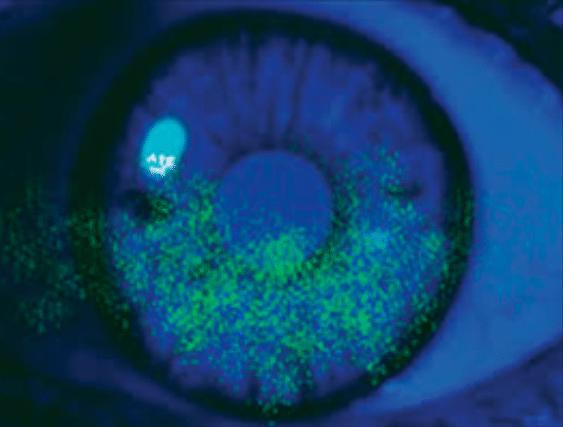
A persistent sense of irritation, burning, or grittiness in the eyes might signal dry eyes. The protective tear layer suffers when eyelids cannot distribute tears effectively, compromising its effectiveness in shielding the eyes from irritants, and reducing clarity

It is critical to acknowledge and address this condition as neglecting it could have broader repercussions on one’s ocular health, potentially paving the way for more severe conditions. Fortunately, modern advancements offer a myriad of strategies to mitigate these effects, from lifestyle adjustments to cutting-edge treatments such as punctal occlusion, empowering individuals to take control of their eye health with confidence and optimism.

What Is Age-Related Macular Degeneration?

Age-related macular degeneration (AMD) is a progressive eye condition primarily affecting individuals over the age of 50. It is characterised by a deteriorating macula.

The macula is part of the retina that enables us to see fine detail and perform tasks like reading or driving.

While AMD does not lead to complete blindness, it significantly impairs central vision, hindering daily activities.

There are two main types of AMD: dry and wet, with dry being more common and wet being more severe.

Having a clearer understanding of AMD and its symptoms enables early detection and management, significantly improving quality of life and retaining independence longer.

Ultimately, the impact of AMD can be lessened with vigilance and care. Early diagnosis facilitates effective treatment options, such as photodynamic therapy, to mitigate further vision loss.


Early Signs and Symptoms of AMD

Initial signs include subtle changes in vision.

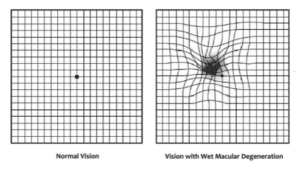
Most individuals with early AMD do not notice any symptoms. The absence of evident signs often obscures the underlying progression of macular degeneration, making it a silent assault on one’s vision. Eventually, however, one of the key indicators of progressing AMD is the difficulty in perceiving straight lines, which may appear distorted or wavy, often detectable with an Amsler grid.


Initial signs include subtle changes in vision.

As AMD advances, the clarity of central vision diminishes—it might feel as though smudges obscure parts of your view, reducing visual acuity, even as peripheral vision remains unaffected. Such experiences underscore the necessity for regular eye check-ups to catch these subtle changes early.

Though these early signs may seem benign, proactive engagement through regular consultations with eye care professionals can be transformative. By maintaining awareness and securing timely medical advice, individuals can embrace life with a renewed sense of empowerment, mitigating the potentially pervasive impacts of AMD.

Types of Age-Related Macular Degeneration

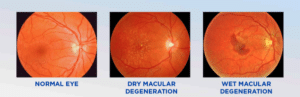
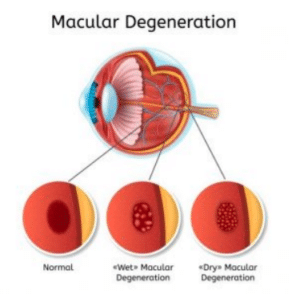
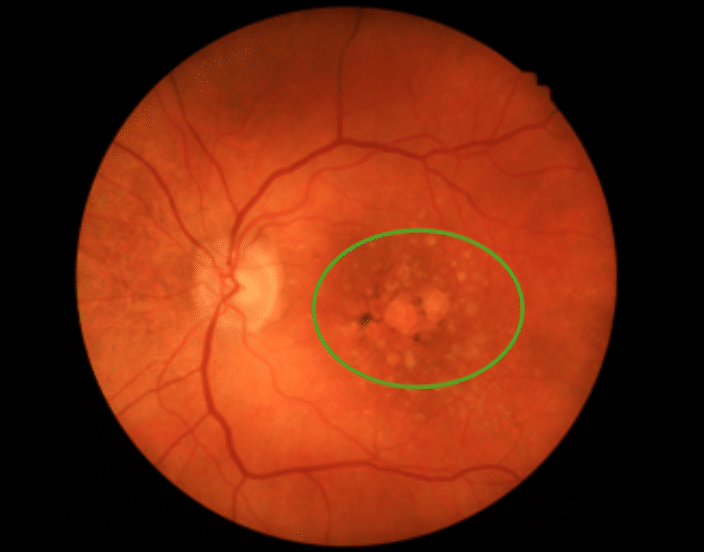
Age-related macular degeneration predominantly manifests in two distinct forms, dry and wet, each having unique characteristics and implications. Dry AMD, the more prevalent type, progresses gradually and is marked by the accumulation of drusen, yellow protein deposits beneath the retina, leading to a thinning macula.

Conversely, wet AMD is characterised by abnormal blood vessel growth and leakage from blood vessels beneath the retina, causing more rapid vision deterioration.

1. Dry Age-Related Macular Degeneration

Dry age-related macular degeneration is the most common form of AMD, affecting 80% of those diagnosed. Characterised by the gradual build-up of drusen under the retina.

Although dry AMD progresses slowly, it is crucial to monitor for changes known as “geographic atrophy”. This stage may involve significant thinning of the macula, leading to vision changes.

This condition accounts for significant global vision impairment among people aged 50 and above.

In managing dry AMD, lifestyle changes, including the use of dietary supplements and treatments like photodynamic therapy, can make a considerable difference. Improving diet to include fruits, vegetables, and omega-rich foods, along with avoiding smoking, may help reduce progression. Regular eye exams are essential in tracking progress and implementing timely interventions.

2. Wet Age-Related Macular Degeneration

Wet age-related macular degeneration, although less common, is a more severe form of this vision condition, often leading to rapid vision loss. It affects predominantly those aged 50 and above, requiring vigilant monitoring.

This condition’s hallmark, often discussed among age-related conditions, is the rapid growth of abnormal blood vessels under the retina. These vessels may leak blood and protein, resulting in scarring and rapid central vision loss.

This condition’s hallmark, often discussed among age-related conditions, is the rapid growth of abnormal blood vessels under the retina. These vessels may leak blood and protein, resulting in scarring and rapid central vision loss.

Anti-VEGF treatments work by directly intercepting the vascular endothelial growth factor involved in blood vessel proliferation. This intervention has proven transformative for many patients.

If detected early, laser therapy or photodynamic therapy might be other effective treatment options. This involves using focused light to target and seal leaking blood vessels, protecting the retina’s function.

Diverting attention to technological advances, these treatments underline hope. Regular eye screenings and proactive management are key strategies to preserving vision quality and preventing vision loss.

Main Causes of AMD

Understanding the causes can illuminate pathways to prevention.

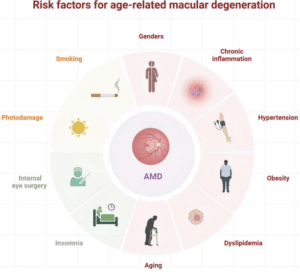
Age-related macular degeneration predominantly affects individuals over the age of 50. This increase with age underscores the significance of maintaining vigilance towards ocular health, particularly as one moves through life’s later stages. Furthermore, heredity is one of the strong indicators of susceptibility, with family history markedly elevating an individual’s risk factor.

Certain lifestyle choices contribute significantly to the disease’s onset.

Smoking, with its myriad health implications, has been identified as a major risk factor—and steps towards cessation, even later in life—is crucial in mitigating its detrimental impact. Moreover, dietary habits high in saturated fats, commonly found in processed foods, are believed to exacerbate vulnerability.

Coupled with environmental factors, managing these controllable lifestyle factors, including maintaining optimal body weight and controlling blood pressure, is essential in any AMD prevention strategy. Progress echoes throughout 2023, heralding breakthroughs that may soon offer enhanced, tailored interventions to a population where prevention seems paramount by altering modifiable risk variables.

Key Risk Factors for AMD

Age is the most significant determinant for age-related conditions such as age-related macular degeneration, with individuals over 50 particularly vulnerable.

As we mature, these risk factors like smoking and hypertension (high blood pressure) need to be acknowledged, as they escalate the likelihood of encountering AMD and its long-term repercussions.

The terms “age-related” and “macular” thus underscore the importance of vigilance in this ‘vision-specific arena’.

1. Age and AMD Risk

Age-related macular degeneration (AMD) predominantly affects individuals above 50, making age a primary risk determinant. As life expectancy increases, the prevalence of AMD is expected to rise.

Turning 50 marks a pivotal age where regular eye examinations become crucial. Such screenings, including the use of an Amsler grid, help in the early detection of AMD, enabling timely intervention for better outcomes and potentially preserving visual acuity.

Interestingly, scientific research highlights a correlation between ageing populations and AMD’s prevalence, emphasising the importance of regular ophthalmological check-ups. Such proactive measures can make a difference.

While age is an unchangeable factor, understanding its implications enhances awareness, encouraging individuals to adopt protective strategies. A healthy lifestyle, potentially supported by dietary supplements, can mitigate AMD’s impact.

It’s vital to acknowledge that, although ageing is inevitable, we can buffer against AMD’s effects by enhancing lifestyle choices, such as engaging in regular exercise and consuming nutrient-rich diets abundant in antioxidants.

Therefore, let age serve not as a hindrance but as an impetus for action. Adopting healthier lives can significantly reduce the risk of many age-related ailments, including AMD.

2. The Impact of Smoking on AMD

Smoking significantly heightens one’s risk of developing age-related macular degeneration, imposing severe consequences on visual health.

Remarkably, the toxins contained in a single cigarette expedite the formation of harmful free radicals, which wreak havoc on the delicate macular cells of the eye. This biochemical assault accelerates the progression of AMD, demonstrating smoking’s insidious destructiveness on ocular well-being.

Furthermore, smoking precipitates a reduction in nutrients delivered to the retina due to the constriction of blood vessels, contributing to symptoms such as blurry vision. As a consequence of vascular constriction, smokers may find their blood supply compromised, effectively starving the macula of vital oxygen and essential nutrients for maintaining healthy vision.

Encouragingly, cessation of smoking presents a considerable opportunity to mitigate the risk of AMD progression. As the body begins to heal, the potential for reducing ocular damage increases, reinforcing a powerful narrative for positive health transformation. Thus, prioritising smoking cessation remains a pivotal strategy in preserving eyesight, emphasising an inspiring possibility for improved visual health.

How AMD Affects Vision

Central to age-related macular degeneration is its impact on central vision, rendering vital everyday tasks more challenging.

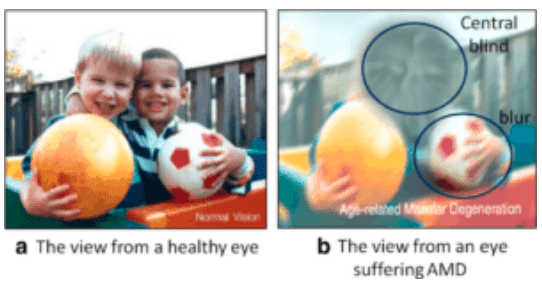
As individuals age, their susceptibility to AMD and subsequent central vision loss increases, highlighting the importance of regular eye examinations. The condition often begins with subtle blurriness or blurry vision in the centre of the visual field, which may develop into larger blind spots that can obscure faces or objects directly in front of you.

Consequently, people with AMD might feel like they’re looking through a foggy window. As peripheral vision remains intact, those affected often have to rely more heavily on this side vision, which doesn’t offer the same clarity as central sight for tasks such as reading or watching television.

Moreover, in severe cases, AMD can precipitate significant lifestyle adjustments as vision loss impacts central vision and visual acuity further deteriorates. The inability to see detail can lead to difficulties in recognising faces or engaging in hobbies that require precision, such as needlework. Nonetheless, with robust public awareness campaigns and advancements in optical health, many are maintaining control over their eye health, bolstering a future where vision impairment from AMD is reduced, and clarity is extended well into the golden years.

Diagnosis Methods for AMD

Accurate diagnosis of age-related macular degeneration, often involving the use of the Amsler grid for early detection of vision changes, is crucial for ensuring timely intervention and optimal outcomes for patients.

To begin with, an early diagnostic approach is a comprehensive dilated eye examination, wherein the ophthalmologist meticulously examines the retina and macula for any telltale signs of AMD. This examination allows the specialist to detect the formation of drusen or macular thinning, which are primary indicators of the condition.

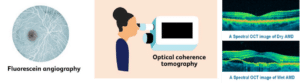
Moreover, Optical Coherence Tomography (OCT) serves as a pivotal instrument in assessing AMD presence. This non-invasive imaging technique captures precise cross-sectional images of the retina, identifying any swelling or abnormal blood vessel growth that could signify the development of new blood vessels and AMD progression.

Additionally, Fundus Fluorescein Angiography is employed, introducing a fluorescent dye through an injection into the patient’s arm. As it travels through retinal blood vessels, photographs are taken to reveal any leaks—indicative of AMD. These diagnostic measures are essential for delineating between the dry and wet forms of AMD, empowering individuals to take charge of their visual health and embark on pathways to effective management and care.


Treating Dry AMD

Nutritional support plays a significant role in managing age-related conditions.

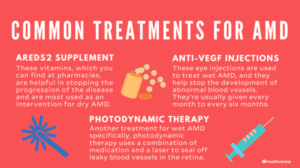
The importance of maintaining overall eye health cannot be overstated. One of the foremost strategies in treating dry age-related macular degeneration (AMD) is through a targeted nutritional regimen, proven to slow the condition’s progression. Specifically, dietary supplements with specific vitamins and minerals have been associated with decreasing AMD advancement.

Consider a daily intake of these nutrients.

For those confronted with the threat of vision decline, incorporating a carefully formulated multivitamin supplement, including vitamin C, vitamin E, lutein, zeaxanthin, zinc, and copper, can fortify your visual health battlements. Drawing strength from the well-founded conclusions of extensive scientific studies, these supplements have demonstrated potential benefits.

A holistic approach to treatment is essential; this is not merely about vitamins but also involves embracing a healthy lifestyle characterised by a balanced diet, regular exercise, and smoking cessation. As we forge ahead with hope and determination towards maintaining vision quality, these proactive measures stand as a testament to the resilience of human potential.

Moving forward into 2023 with this robust strategy, individuals living with dry AMD can anticipate a future where their condition is managed more effectively. This approach fosters optimism and empowerment, enabling individuals to continue engaging in life’s visual pleasures with a greater degree of clarity and confidence.


Treatment Options for Wet AMD

Pioneering treatments like photodynamic therapy are charting new horizons.

Anti-VEGF therapy, a groundbreaking advancement, shows significant promise. This treatment involves an injection directly into the eye, targeting the problematic blood vessels, and has shown remarkable success in preserving vision. Impressively, a series of injections may substantially slow vision decline, providing a lifeline to those affected by wet AMD.

In addition to laser treatment, photodynamic therapy offers a further complementary option.

By focusing a laser beam on the abnormal vessels, clinicians can mitigate damage without operating room procedures or discomfort. This approach underscores the technological advances that continue to revolutionise AMD care, driving us toward a future replete with possibility.


As research progresses, hopes are buoyed by ongoing innovation aimed at improving sight and quality of life for patients worldwide. Continued efforts and global cooperation remain key as we stride towards new medical frontiers. These advancements affirm our belief in the transformative power of medical science when applied with compassion and expertise.

Embracing a healthier lifestyle can, indeed, play a significant role in mitigating the risk of age-related macular degeneration.

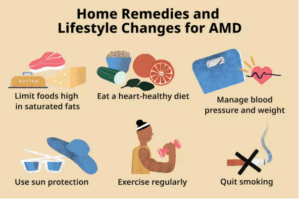
Foremost, one may consider adopting a balanced diet with a generous inclusion of fruits, vegetables, and omega-3 fatty acids, reducing the intake of saturated fats. Such nutritional choices fortify the body’s defences and attenuate risk factors, underscoring the profound connection between general health and ocular vitality.

Additionally, exercise should not be overlooked as a critical component of a preventive lifestyle. By engaging in regular physical activity, individuals can effectively control their weight and blood pressure, additional risk factors in the onset and progression of AMD.

In essence, these lifestyle changes are excellent stepping stones toward preserving eye health. By consciously avoiding smoking, maintaining optimal cholesterol and blood pressure levels, and adopting nourishing dietary habits, one can staunchly reinforce their stance against AMD. This proactive approach not only empowers individuals but also instils hope through achievable positive change.


Note icon
The symptoms and possible related eye conditions/diseases in this section are for general reference only, and do not contain all visual symptoms or all possible related conditions or diseases. If you have any unusual vision symptoms, speak with your ophthalmologist.

At Hesed Eye Specialists, we are dedicated to not just restoring, but truly enhancing your vision.

Trust in our expertise and commitment to excellence as we accompany you on your journey towards clearer, brighter, and healthier eyes. Experience the profound difference that an eye clinic with unparalleled technology and compassion can make in your life and vision. 

Book An Appointment
Make An Appointment

Free Shuttle Services

There are free shuttle services available on Monday to Friday from 8.30am to 5.10pm and Saturday from 8.30am to 1pm.*

* These services are not available on Sundays and public holidays. Please note that pick-up and drop-off are at the designated stops only and the schedule is subject to change due to traffic conditions and other factors without prior notice.

Mondays to Fridays (Excluding Public Holidays):

Gleneagles Hospital - Mount Elizabeth Hospital - The Heeren

Gleneagles Hospital
Mount Elizabeth Hospital
The Heeren
8.30 am
8.30 am
8.30 am
8.30 am
8.30 am
8.30 am
8.32 am
8.32 am
8.32 am
8.30 am
8.32 am
8.32 am

Saturdays (Excluding Public Holidays):

Gleneagles Hospital - Mount Elizabeth Hospital - The Heeren - Mount Elizabeth Novena

Gleneagles Hospital
Mount Elizabeth Hospital
The Heeren
Mount Elizabeth Novena Hospital
8.30 am
8.30 am
8.30 am
8.32 am
8.30 am
8.30 am
8.30 am
8.30 am
8.32 am
8.32 am
8.32 am
8.32 am
8.32 am
8.32 am
8.32 am
8.30 am

For faster response, please Whatsapp us