
In today’s world, our eyes are working harder than ever. Long hours on digital devices can leave them feeling tired, dry, or strained. At the same time, as we age, our eyes naturally undergo changes that can affect how well we see. By understanding these challenges early and taking proactive steps, you can protect your vision and maintain healthy eyes for years to come.
Digital Eye Strain: A Modern Challenge
If you’ve ever noticed blurred vision, headaches, or a gritty sensation after a day on your computer or phone, you may be experiencing digital eye strain.

This condition is increasingly common, with more than half of working adults reporting symptoms. In my experience, It can be particularly challenging especially in patients who are just turning 40 when presbyopia (a condition where the ability of the eye’s innate ability to focus for near is beginning to reduce) sets in.
The main causes include:
- Prolonged screen time without breaks
- Poor posture or screen ergonomics
- Reduced blinking, which leads to dry eyes
- Glare and improper lighting
- Inappropriately fitted glasses
Simple steps like adjusting your screen position, ensuring good lighting, and following the 20-20-20 rule (every 20 minutes, look 20 feet away for 20 seconds) can make a big difference.
Sometimes a holistic two-step approach is required where we may need to address the dry eyes and adequately treat the dry eyes first and then check if the glasses are correctly prescribed. The reason this two-step approach is needed is because significant untreated dry eyes can affect the accuracy and precision of the spectacle correction making the glasses ineffective in correcting the reading difficulty. This can result in a dual problem of dry eyes and poorly corrected presbyopia which makes the problem worse.
Aging Eyes: What to Expect
From the age of 40 onwards, the eyes begin to change in predictable ways.

Common conditions include:
- Presbyopia – difficulty focusing on near objects, often requiring reading glasses
- Dry eyes – due to changes in tear production
- Cataracts – clouding of the natural lens, affecting clarity of vision
- Age-related macular degeneration (AMD) – gradual loss of central vision
- Glaucoma – a condition where the optic nerve is damaged by eye pressure that is unhealthily high for the optic nerve to function well
While some of these changes are normal, others may signal more serious conditions. That’s why regular eye exams are so important — early detection allows for timely treatment and better outcomes.
This is why the American Academy of Ophthalmology recommends that adults get a complete eye examination at age 40.
Protecting Your Vision: Practical Steps
To safeguard your eyes at every stage of life:
- Take regular breaks from screens
- Maintain proper posture and lighting when working
- Eat a balanced diet rich in omega-3s, leafy greens, and antioxidants
- Wear sunglasses to protect against UV damage
- Keep up with scheduled eye examinations, even if you feel fine
- If you play racket sports or contact sports where there is a risk of injury to the eye: wearing sports goggles to protect your eyes is essential

Early Detection is Key!
If you do not remember anything from this article, the key message I hope you can take away is that early detection is key.
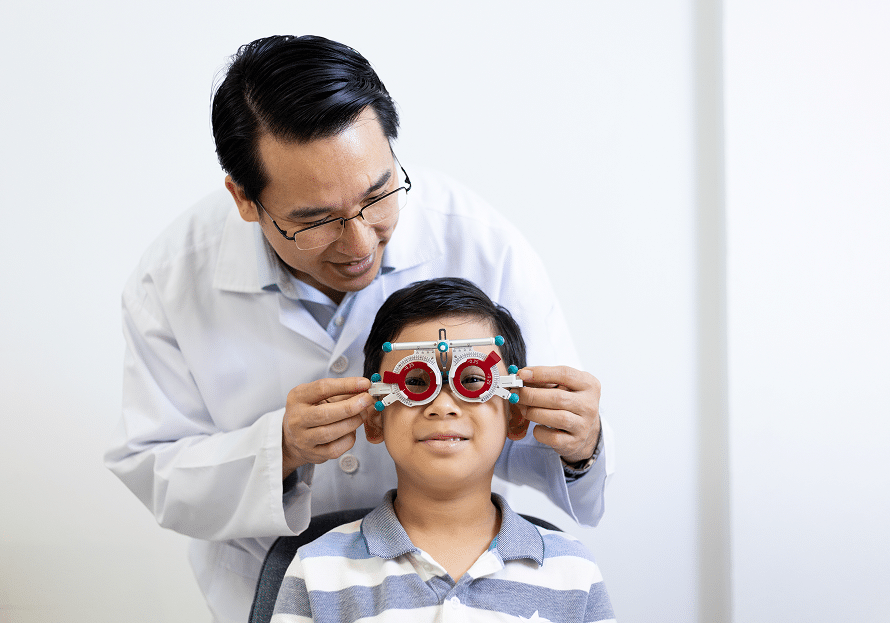
For children before 8 years of age, early detection of uncorrected spectacle power can prevent lazy eye.
For children of all ages with short-sightedness, early detection and appropriate correction and use of myopia prevention strategies can prevent our children from ending up with very high degrees which leads to increased risk of sight-threatening eye conditions in adult life.
For adults, early detection of glaucoma can prevent irreversible blindness and often means just the use of eyedrops to control the condition and minimal impact on our quality of life. Macular degeneration when detected in its earliest stages can be prevented from worsening through diet and lifestyle changes and early treatment to prevent damaging vision loss.
Ophthalmology has brought about significant advances in our ability to detect eye conditions very early, combined with advances in treatment has given us the tools to help patients gain control of their condition and not lose vision!